Advice For Improvisers: Stop Approximating

One of the ways I seem to be able to help myself as a musician  (as well as my students!) is to take time to clarify  the details involved in playing music. Sometimes a problem remains unsolved simply because the musician in question hasn’t addressed one small element sufficiently.

Though of course this is an issue that can hold back musicians in any genre, I’m thinking here specifically about how this affects the improvising musician.

In the last couple of years I find myself going back to deeply examine and practice what might seem to be very basic musical material.

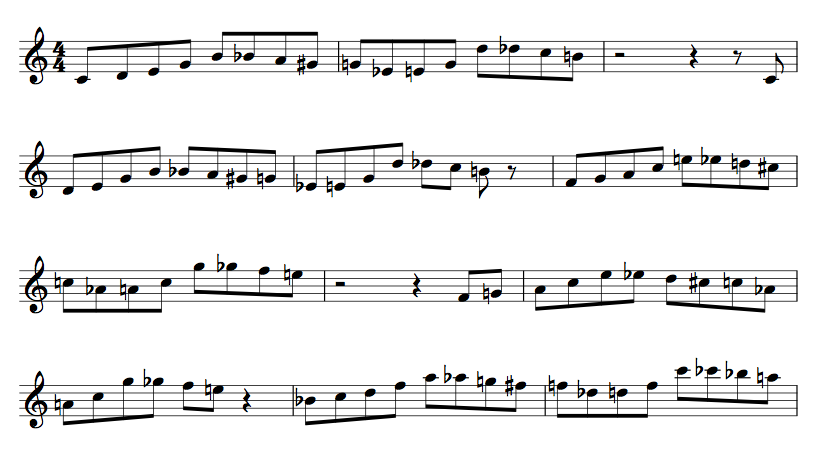
For example, I’m getting an even deeper intimacy with my diatonic scales, practicing all kinds of different melodic patterns and their variations. No passing tones, no chromatic outlining, just simple diatonic music in major and minor.

It’s been wonderful for me to discover how much music can be made from just using these materials.

In turn, when I improvise on any type of music, whether harmonically based (chord changes), thematic, modal or even completely open-ended and free music, I have found a wealth of beauty and surprise.

Just to be clear, I did spend a good amount of time in the past “mastering” my scales and arpeggios (the diatonic material), but I never went as deep as I could have.

And as the years progressed I worked less on these diatonic materials and more upon chromaticism, symmetrical tonalities, intervalic based (non-diatonic) melodies, and so forth.

And that was great! It opened up my thinking and playing to help me find my voice as an improviser (After all, these, too, are essential musical materials).

But as time passed I began to experience some dissatisfaction in my improvising.

Through reflection and careful observation, I came to realize that my melodic language was lacking in a certain kind of possibility of colors and melodic shape. For me to address this, I realized I had to go deep into the diatonic language again.

As I began to explore this, I realized that I didn’t have the conception/ear/execution mastery of this material that I really needed. So I started to listen to (and study) great diatonic melodies (lots of Bach, lots of beautiful folk melodies from around the world!)  and worked on getting some of this material inside of me.

I would find a particular melodic passage that really moved me, then put that passage into all twelve keys. I would also make variations on these melodic ideas, and spend a good amount of time improvising slowly in order to crystalize these new ideas.

I also took time to work on singing and playing ideas that I imagined myself, in order to connect my muse to my instrument. I’m still working on this diatonic material nowadays, but with more complexity (e.g., rhythmic displacement and variation, complex meter, etc.)

The long and short of it is that I’ve gained a certain kind of precision and clarity with this material that I just didn’t have before.

In essence, I stopped approximating. Because of this my entire improvisational language has been significantly expanded and enriched.

So, this post isn’t really about the value of doing all this diatonic work. It’s about going deeply into the musical material to gain control over your medium. For me that meant revisiting and deepening my control over diatonic material. I had to stop approximating.

Where do you approximate when you improvise?

Is your control of time strong and clear? How about your articulation?

Is your sound meaningful and beautiful on each note that you play?

Is your rhythmic imagination rich, or is it still mostly the language of endless eight notes?

Is your phrasing free and spontaneous, or are you stuck in two-bar symmetry as you improvise?

Do you take full advantage of the range and color palette of your instrument? How broad is your harmonic knowledge?

To go deeper into the music, you must gain precision. This means really being able to control the materials of music. Ask yourself where you are approximating when you improvise, then make a practice plan to bring you into the rich and beautiful world of precision and clarity.

I actually borrowed this “stop approximating” slogan from the great pianist, Bill Evans. Mr. Evans had a remarkable tone, clarity and conception in his playing that always sounded immediate, spontaneous, beautiful, thoughtful and passionate. This was reflected in his approach to practice.

Here’s the video below of him elaborating on this topic. Enjoy:
Want To Improve Your Technical Facility? Pay Attention To Your Sound

I’m having a week teaching where many of my Alexander Technique students are (purely coincidentally) discovering the same truth about their technical facility. It’s a a truth that is rather surprising to them. Let me illustrate with a short story:

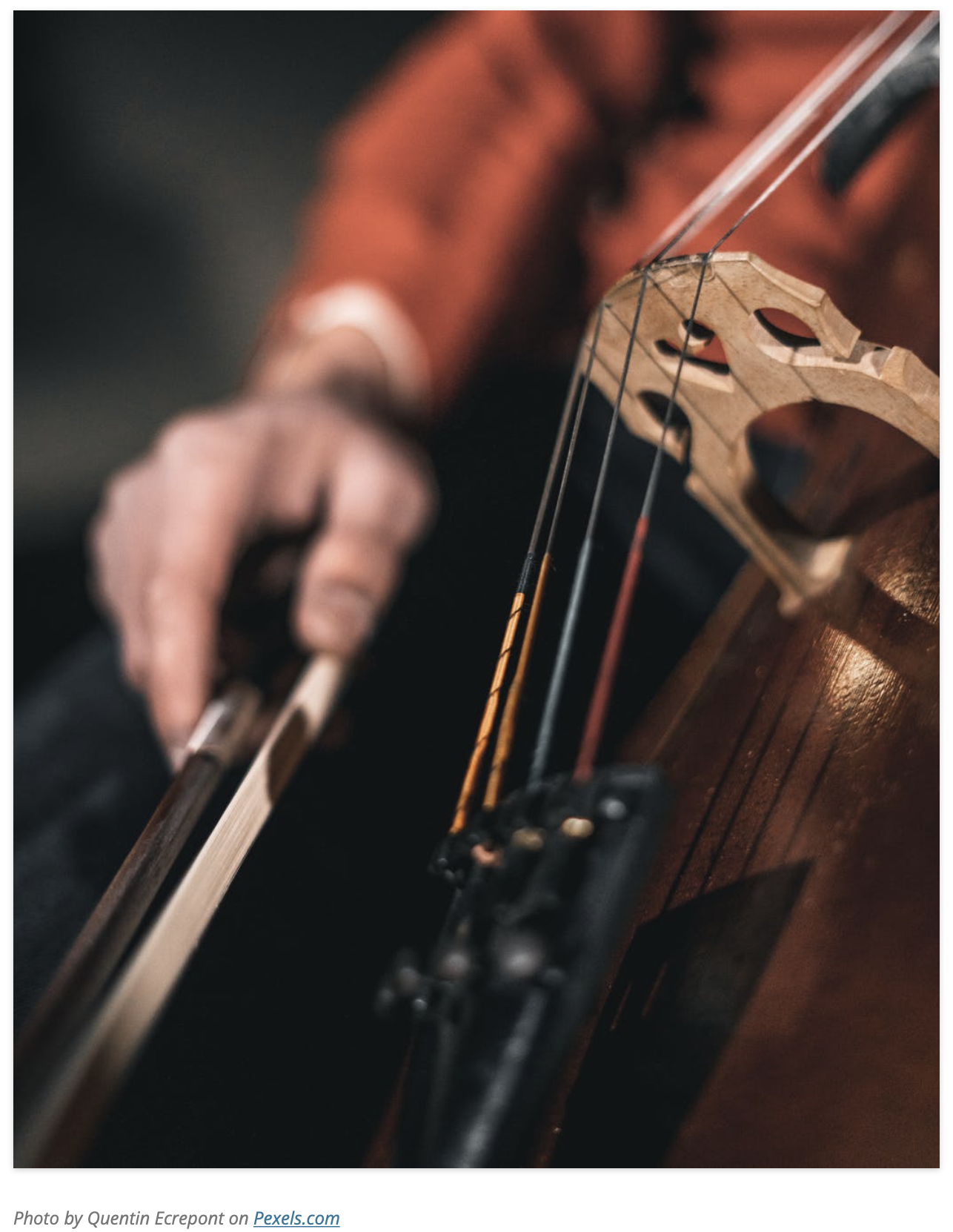
One of my students, a fine cellist, was in his lesson with me noticing the lack of evenness and rhythmic clarity in a particular musical passage he was playing. (Specifically, he was rushing some notes in the passage.)

As my student and I began to explore this further (he, too, could hear the rhythmic imbalance in the passage), I asked him to stop the moment the sound of any given note in the passage was less than the quality he wanted. (I had him slow the tempo a bit to make this exploration.)

He stopped each time he didn’t like his sound on any given note in the passage. This was somewhat new and surprising for him, as he said he wasn’t paying such careful attention to his sound as he played the passage.

What we found was that many of the notes he didn’t like were notes bowed on the upstroke. I had him repeat each of these notes several times, going from downstroke to upstroke.

What became immediately apparent was the difference in color between the two strokes. (Now, for sure there is naturally a color difference between bow strokes, but his was more than necessary or desirable.) The reason he could so easily hear the difference is that he normally plays with a more homogeneous color between bow strokes.

So we had to ask this question: What are you doing differently with your entire self as you change bow direction on this particular passage. What are you adding in terms of tension and doing that you don’t need to do?

We found that he was mostly bowing from a narrowing shoulder (mostly contracting) on the up stroke in this passage, as opposed to bowing from a widening back (mostly expanding), which he was doing on his downstroke. It was fairly easy for him to redirect himself (he’s a good Alexander student!) and to not worsen the conditions of how he was using himself from up to down bowing.

He was then able to keep a beautiful evenness in his tone color.

Suddenly, as if by magic, as he brought this into the context of the passage he was playing, his rhythmic troubles disappeared. He was soon able to play the passage with great facility, speed, clarity and expression. He could really hear his sound as he played.

As I mentioned above, this seems to be the week that many of my students are learning this same lesson, whether on guitar, saxophone, trumpet, drums, or cello. It’s actually a lesson about cause and effect: Technical problems are often rhythmic problems. Rhythmic problems are often sound production problems. Sound production problems are often problems of unnecessary tension. Unnecessary tension is caused by unhelpful thinking.

(Last week I wrote an article specifically about maintaing the ideal conditions in yourself to play your best. Give it a read after you finish this article.)

Often when musicians are struggling with a technical passage, they sort of lose connection with their sound. They get very interested in the parts of themselves they think are responsible for playing the passage. For my cellist, it was placing far too much attention in his left hand, at the expense of dividing his attention and cutting of his capacity to really hear his sound.

There is one simple truth about the great virtuosi: every single note they play is sonically gorgeous. Every note. Not only does this make beautiful music, it also makes for greater technical facility.

So if you’d like to improve your technique, make paying attention to your sound the lens that you judge the quality of your work. Sounds simple enough, I know.

Here is a way to proceed as you practice in this manner:

  • Don’t approximate-Give yourself a chance to really hear each passage clearly, note by note. This means playing very slowly, with the metronome.
  • Listen and stop-The moment you hear any note out of color, any note less than as beautiful as you know you can make, stop and see if you can understand why it is less than ideal. Are you tensing somewhere? Are you being less than accurate with finger placement, embouchure control, air stream, bow energy (or any other element relevant to your instrument). Give yourself a chance to discern what you are doing differently with yourself to interfere with the sound, then make a conscious choice not to do that.
  • Stop and listen-Once you’ve noticed your less than optimal sound, stop and play this note by itself a few times, sustaining it, to really get back in touch with the quality you want. See if you can use your thinking to bring you back to that ideal state of conditions to produce the sound you know you can get.
  • Work your way forward-Define the length of the technical passage that’s presenting the challenge. Let’s say it’s about 12 notes long. Play from the first note until you run into any notes whose color you don’t like. Play the passage up to that note and sustain that note, again, going back to your good conditions to produce your best sound. Continue this until you can successfully make it through the entire passage with beautiful, clearly intended and executed sound.
  • Enjoy your new rhythmic clarity and technical control-You’ll be consistently pleased with the results if you follow this procedure.

To sum up, stay connected to the sound you hear on each note, discern what you are doing if your sound is less than what you know you’re capable of, then trace that back to how you’re thinking. Because above all, it is your thinking that conditions everything else in your playing.

Maintaining The Conditions In Yourself To Play Your Best

Do you ever wonder why things that you practice sometimes get worse, rather than better, as you practice them? The answer is simple: You gradually worsen the conditions in yourself to play your best.

Simply stated, when you’re playing your best it is largely because you’ve been able to maintain the best conditions in yourself to play your instrument.

One of my Alexander Technique students, himself a highly accomplished saxophonist, related to me a story about working with the metronome to increase his velocity on a particular piece he was practicing:

“I was gradually increasing the tempo each time I played through the piece in my practice session. Each time with great results. I was playing freely, easily and accurately. I had worked it up to quarter note = 140. But then, feeling like I wanted to test the waters, I jumped up to quarter note = 160 (the target tempo) and it all fell apart. Not only was I making lots of errors, but also, I was playing with great effort, my breath was no longer moving freely and I felt like I could no longer really hear my sound.”

But here’s where it gets interesting. He continues: “But then when I returned to quarter note = 140, I played just as badly: tense, rushed, unclear tone, lots of mistakes and so forth. It’s as if I had wasted all that practice. Why couldn’t I play at 140, when just moments earlier I could?”

I answered him, “Because you had drastically changed all the conditions necessary in yourself for playing well that you had gradually been working toward. You did this by jumping far ahead of yourself and falling back into your old habits of tension. Then you took those habits and the frustration that comes with them back into your playing at the slower tempo.”

By “jumping ahead” the way he did with the tempo he indulged in something we in the Alexander world call “end-gaining”. (Specifically, placing 100% of your attention and effort on trying for a specific result, as opposed to paying attention to how best to obtain that result.) Because of this he had a difficult time returning to the ideal conditions he had created in himself earlier.

You see, my student started out paying attention to process (in the Alexander Technique we call this paying attention to the “means-whereby”) as he gradually increased his tempo challenges with the piece. Each time he played he was able to use his thinking, to use his conscious attention, to maintain the conditions in himself to play his best at any tempo.

This is what the “means-whereby” is all about. It’s about using your thinking to maintain the best conditions in yourself. The conditions that give you the greatest chance at achieving your desired end.

So what are the “best conditions”? Here are a few of the most essential, from an Alexander point of view:

  • Your neck is free-This means that you’re not compressing your head down and back into your spine, nor jutting your head forward. Your simply leaving your neck alone so that it can release your head upward off  the top of a lengthening spine. This also means that your jaw is not tense, you are not tightening your face unnecessarily, and that your tongue is free to move.
  • Your shoulders (and arms) are free-Your shoulders can release and widen in gentle opposition to your spine lengthening. This will create the best conditions in your arms, and in your hands as well.
  • Your back is free and integrated-You are neither arching your lower back (tilting your pelvis forward) nor collapsing and rounding your back. Just let your back stay in neutral as you let your head balance on top of your spine.
  • Your knees aren’t locked-No hyper-extended knees (locking your knees backwards). This is something that also interferes with the good integration of your back.
  • You are breathing easily and naturally-No noisy and effortful inhalation. Your torso is free to expand in all dimensions to allow your breath to work its best.
  • You are not in a hurry– This is perhaps somewhat less tangible, but crucially important. As soon as you get into the “in a hurry mode” you are taking yourself out of the present moment and are dividing your attention, cutting yourself and your good use out of the picture.

When you maintain these conditions, you just plain play better. When these conditions are not present, you not only run the risk of not playing at your immediate potential, but also, of steering yourself toward fatigue and injury.

So what can you do to help find and maintain the best conditions for yourself as you play your instrument?

  • Start with your thinking-Every bit of muscular effort you make (whether necessary or not) is conditioned by your thinking. It’s not about your body. It’s about how your thinking is inextricably linked to your body. Always keep this in mind and you’ll avoid the frustration of “my hands just aren’t working today”.
  • Learn about your body-Try to gain an accurate understanding of your joints, how your body functions best with respect to playing your instrument.
  • Keep the importance of a free and easy use of yourself absolutely primary-It’s not about playing faster, higher, louder, etc. It’s about staying easy in yourself and developing the kind of playing habits that make playing more challenging material easier.
  • Be patient-Don’t always try to reproduce what you did on another day. If you could play this piece at quarter note = 160 yesterday, don’t expect to go that fast today when you practice. Expect nothing. Instead, cultivate a “wait and see” attitude. If you always stay with maintaining your good use (the good conditions) your ability to play at more challenging tempos will come as a result. Let there be fluctuations. Accept the present situation.
  • Seek help-Because of your habits it can be difficult to get a true sense of what it’s like to create these ideal conditions in yourself. A skilled Alexander Technique teacher can work wonders here in helping you with all the above.

By learning to shift the emphasis from what you do to how you do it, you insure yourself a chance for consistent improvement.

A Few Tips For Improving Your Sight Reading Skills

Being able to read music well at sight is a skill that just about any musician in any genre should aspire to. The really good sight readers I’ve played with not only play the music reasonably accurately at first sight, but also, they tend to be able to really make music out of it, really make the notes jump of the page.

In my work as primarily an improvising saxophonist, I wouldn’t say I devote the attention (both in work and practice) to sight reading that say, a pit orchestra musician might. But I do work on keeping my reading skills in decent condition. Even in my musical world it makes playing with others nicer for me and for them. I waste less time struggling with the notes, plus I’m able to find music in the notes more readily. Win/win situation.

So at the request of some of my students, I thought I’d offer some suggestions about improving your sight reading. Some of these suggestions are things that you need to practice, and others are things you can do immediately to improve your reading.

All this assumes you already have a good grasp of music reading fundamentals. If you don’t, take a class, find a book, find a teacher or get a friend to help you get started on you journey to becoming literate in the notated language of music.

IN THE PRACTICE ROOM

It probably comes as no surprise that those who read well spend a good deal of time reading. It’s as simple as that. So here are some suggestions about what you can practice to improve:

  • Become a master of time-Work with your metronome on very slow, easy pieces. Learn to really listen and feel the time. Wait for the time; don’t anticipate. Pay attention to yourself primarily, keeping your own ease, breathing and balance in mind as you do so. You cultivate great habits of reading in performance by doing so.
  • Become a master of rhythm-Keeping the rhythmic flow going as you read is of top importance. The best sight readers I know will sometimes play the wrong pitch, but rarely ever play the wrong rhythm. And if they do, they keep the whole thing flowing along, never being put off track by their mistakes. This rhythmic flow not only keeps the “illusion” of accurate sight reading, but also, it keeps you engaged in hearing and responding to the music in the most helpful way. Two very good basic books for improving your reading of rhythms are, Modern Reading Text In 4/4 Time, by Louis Bellson, and, Rhythm Reading, by Daniel Kazez. Working with, and understanding, polyrhythm and polymeter can also significantly improve your sight reading ability. (I have an eBook available that methodically introduces and explores polymeter, entitled  Essential Polymeter Studies in 4/4.)
  • Construct and practice from your own sight reading book-Put together a huge book, maybe an inch or two thick of things to sight read. Find pieces that run the range from exceedingly simple and easy, to more challenging, all the way to somewhat beyond your comfort zone (or even your ability), and organize them from easy to difficult. Make a commitment to play something from the book every day. Try to find pieces that are short, so even if you don’t have much time you can still play several pieces in various keys, time signatures, styles, etc. The internet is loaded with great resources for free, downloadable music in a multitude of genres.
  • Practice paying attention to the details-Find pieces that are fairly easy to play rhythmically pitch-wise,  but have loads of articulation, dynamic and form challenges (complicated road maps). Aim toward seeing and paying attention to these details with the same sense of priority you give to pitch and rhythm. Learn to cultivate the ability to see all the detail of the music at once.
  • Sing-Practicing sight singing is a great way to improve your instrumental music reading. It gets you to really absorb the material on the page and immediately turn it into meaningful sound. Not only will this help you with your pitch-reading accuracy, but also, it helps you sound confident and musical as you read.
  • Practice music that is not for your instrument-This is a great way to challenge your reading at less than ideal ends of your range and to address technically “awkward” movements on your instrument. I’ve seen some pretty decent readers fall apart the moment the piece starts spitting out a bunch of notes in the extreme range of their instrument. It’s not like they can’t play it. It’s just that they sort of “give up” trying to stay with this ocean of perceived “difficult” notes. Don’t let that stuff throw you off your game.
  • Transpose-If you play a transposing instrument, like saxophone, you have to be able transpose some things at sight. And even if you don’t it’s a great way to get your brain taking in and processing the information on the page at light speed. Do this everyday and discover how easy it is to read flurries of sixteenth notes that you don’t have to transpose. It works.

WHAT YOU CAN DO IMMEDIATELY TO IMPROVE

Whether in the practice room, playing a gig, or sitting in at a rehearsal, here are some ways to help you work optimally:

  • Pay attention to yourself-Really. Always aim to play with ease and balance, and as you read music, don’t let yourself be pulled away from that ease and balance. In particular, avoid tensing your neck, shoulders and back, and make sure that your breath is flowing readily. This will help you to maintain a state of psycho-physical well-being which keeps you in the best condition to deal with the unknown (the music!)
  • Scan the music before you play-Make it a habit of looking carefully (as time permits) at the music before you play it. Notice the fundamentals first: key signature and time signature (and if they change!), repeats, road maps (D.C., Codas, etc.), dynamics, etc. Then see if you can notice any potentially tricky passages and give yourself a few seconds just to take the information in. You’ll be pleasantly surprised at how this transforms your confidence and execution when the group starts actually playing the piece.
  • React differently to your mistakes-When you do make the inevitable mistakes, try not to lose your good balance (see above). Remember to be easy with yourself, let your neck, shoulders and back stay free, as well as your breath. By not flinching every time you make a mistake, you allow yourself to keep the musical flow. Very important. This is also something you can begin to apply in the practice room. When you learn to let your mistakes go, you play better.
  • Trust your judgement-Don’t assume that the player next to you is right and you’re wrong when you enter at different times in the piece, or otherwise seem like your not in sync. This is where some fairly decent readers sort of fall apart. Their confidence is turned inside out. Remain close to your reasoning and discernment, and don’t be afraid to be right.
  • Stay in touch with your sound and pitch-Often you can tell when somebody is reading simply because their sound becomes strange and tentative. Allow your sound flow out with confidence and self expression. Let those wrong notes be supported by a beautiful tone and good intonation. You’ll be amazed at the difference that makes in how you sound.

So there you have it. A few of the key things I put in practice to make me a better sight reader. I think they can help you, too.

An Important Thing To Keep In Mind When Changing Your Habits

Musicians come to me for Alexander Technique lessons for a variety of reasons, but typically it’s because they’re experiencing a lot of unwanted tension (and often pain, too) as they play their instruments. Since they know I’ve been successful in applying the Technique to solve my own problems as a musician, they invariably ask this question: “What does it feel like to play music without all that excess tension?”

They are often surprised (and sometimes annoyed) by my seemingly evasive answer: “I don’t really pay much attention to how it feels.”

Of course, they press me on this subject. “So you purposely ignore how you feel when you play?”

“No, I wouldn’t say that. I easily sense what’s going on in myself and include this into my consciousness. But I don’t let the  feeling of what I’m doing guide my efforts. I realize that what I feel is a result of how I’m directing my thinking. So I want to stay with directing my thinking in such a way as to play my best, and that includes playing with much less tension and effort than I used to create habitually. I’ve learned to trust my thinking, and so I simply acknowledge and enjoy the feeling of playing my instrument.”

As they press me further, it becomes clear that what they really want is for me to describe what it feels like to play now, as opposed to my “pre-Alexander” self. Fair enough. This is the answer I give: “To play now it feels practically opposite of what I thought it would feel like to play freely and easily before I started taking Alexander lessons.”

Practically the opposite of how I imagined it.

This is an important thing to keep in mind when changing your habits.

F.M. Alexander said that, because we are so strongly guided by what our habits feel like, when we actually do something different, even though it might be better for our purposes, it will very likely feel wrong. He described this as having a faulty sensory awareness.

And it is for this reason that it’s not a good idea to be guided by what you feel when you are trying to change your habit. Instead, you’d be better served by being guided by what you can discern. Guided by your thinking, so to speak.

Musicians are strongly conditioned in their habits by their perception of what it feels like to be in control of their instrument. Yet sadly enough, the very efforts some musicians employ to control their instrument become the habit that makes control more difficult, if not impossible.

Then a vicious cycle begins. You start playing with too much tension in an effort to control your sound, time, technical facility, pitch, etc. You actually start having a harder time controlling these things (because of this tension), so you start misdirecting your energy further, adding even more tension and effort to playing your instrument. This takes you even farther from control and confidence.

After a time you begin to believe that you have to use all this effort to get control over your instrument. Yet the more you try, the worse things get. This begins to develop certain unhelpful, yet strong habits.

And the cycle continues, sometimes until pain and injury step in to tell you in no uncertain terms that it’s time to do something different.

Well, if you’re going to do something different with your playing habits, remember that you have to let go of being guided by what it feels like to be in control.

In my case, I would have perceived the feeling of actually being in better control over my instrument as being out of control. Too soft, too mobile, too flexible. This doing more work, that doing less work. This part moving, the other part being still, etc.  All wrong, if I were to be guided by the feeling of my habits. I would have never let myself feel that way, because it would have felt like I couldn’t even play the saxophone.

And this is where the Alexander Technique comes in. As I began to study and apply the Technique, I learned to be guided by reasoning and discernment instead of feeling. What is necessary and what is not to play my instrument. Never mind what it feels like. What am I actually doing (in contrast to what I think I’m doing) as I play? Is this helping me, or making things harder?

As time passed I began to greatly attenuate my habits of tension, and in doing so, began to gain real control over my instrument again. And of course, how it feels to play is much different from before. But as I said, I don’t pay much attention to that feeling. It doesn’t at all feel strange to play now, by the way. It actually feels quite wonderful: fluid, dynamic, easy and free. Because it actually is.

Where our habits are concerned, often what we want is not real change. We want to do the same thing the same way, but somehow with better results (that was Albert Einstein’s definition of insanity). We want it to feel the same way minus the excess tension and pain. That can never happen.

So realize that you probably have no idea what it feels like to play without all your habits of tension (nor should you care). That, in fact, it might feel quite wrong (even though your playing would be considerably better). Don’t  hold onto your preconception of feeling. Find yourself a good Alexander Technique teacher and learn to trust your thinking instead to find highly favorable, consistent results.