
This etude is a playable reference demonstrating how five different melodic minor triads function as altered tonality (harmonic extensions) over dominant 7th chords. Take a look at the example below:
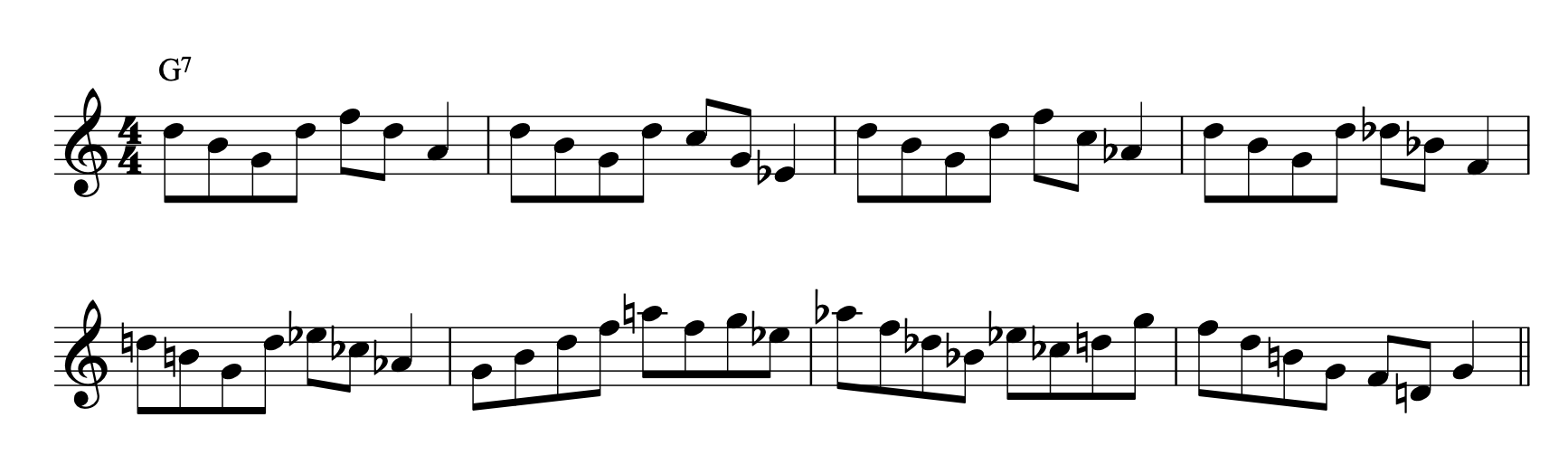
In the first measure the G7 is presented as a triad in the first two beats, then the 7th (F, falling on beat three) is grouped with D and A to form a D minor triad. The second measure starts the same, but ends with a C minor triad. The third measure adds an F minor triad; the fourth measure adds a Bb minor triad; the fifth measure adds an Ab minor triad. In the sixth and seventh measure I combine elements from all the triads to create a melodic line with lots of harmonic tensions, ending with a restatement of the G7 arpeggio.
As you can see, all of the diatonic and natural tensions over the G7 (3,7, -9,+9, +11, -13) are used when using these minor triads (or the minor scales from which they are extracted). By going back and forth between the diatonic triad of the dominant chord (G triad in this case) you’ll be able to hear how these altered tensions sound in relation to the diatonic. I put this pattern in all 12 keys for you to reference and to practice. If you’d like to have a comprehensive method that goes deep into studying and applying the melodic minor scale over dominant chords (and ii-V-I), please consider my ebook, Melodic Minor Scale Jazz Studies: Tonal Applications and Organizations Over Dominant 7th Chords. If you’d like a free downloadable pdf copy of this etude, click the link below: